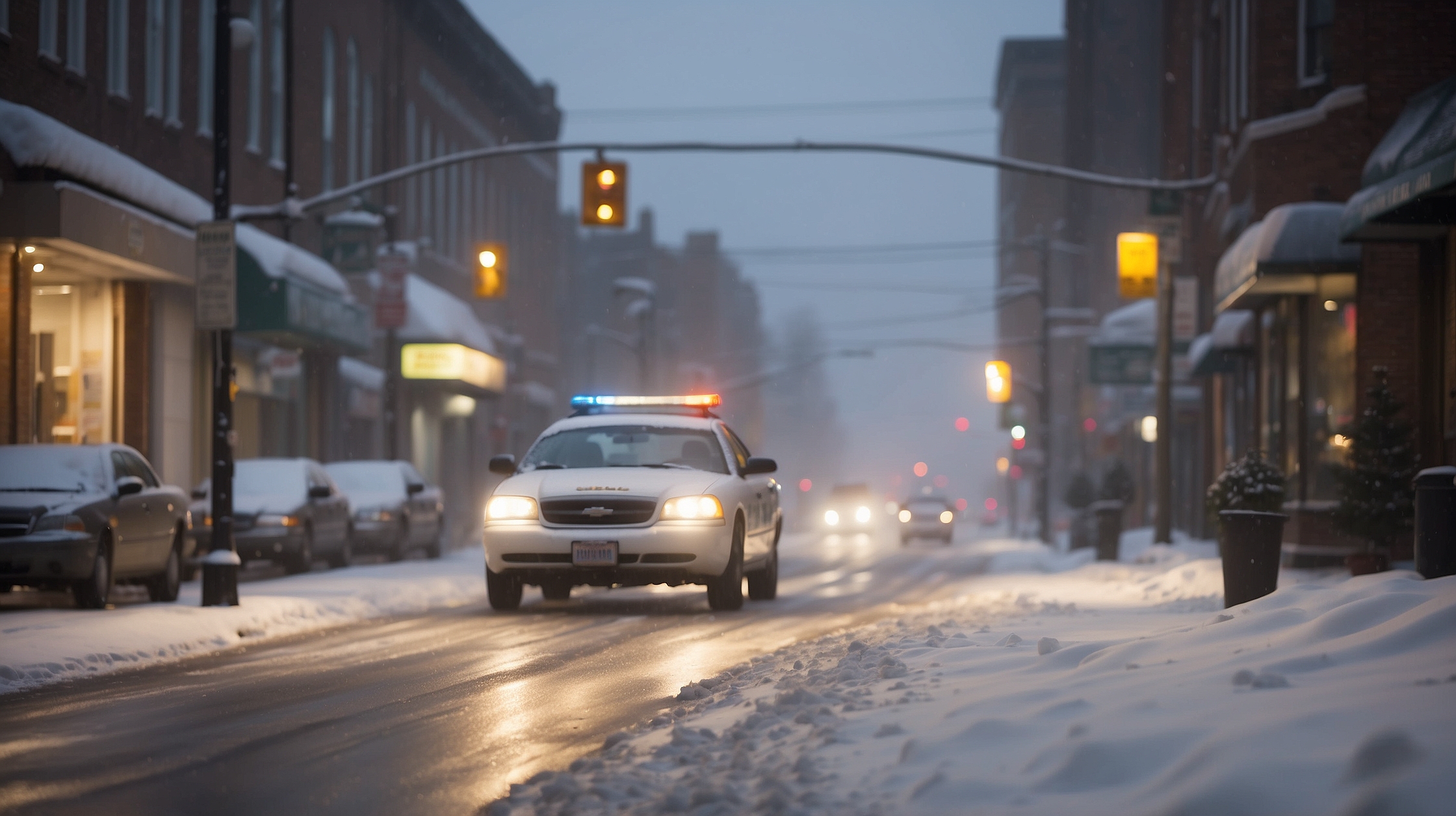
As temperature patterns shift and winter deepens, meteorologists are closely monitoring an unusual development in the upper atmosphere: a potential polar vortex anomaly. While headlines about extreme cold snaps and frigid Arctic blasts may stir concern online, leading climate experts caution against drawing hasty conclusions about long-term climate trends. This anomaly, although rare, is not entirely unprecedented. Understanding its causes, impacts, and what sets it apart from regular seasonal changes is vital for the public to remain informed — and not misled by the volatility of short-term weather events.
The polar vortex, a large area of low pressure and cold air surrounding both of the Earth’s poles, typically strengthens in winter. Occasionally, it weakens or shifts, sending Arctic air southward and triggering colder-than-average conditions far beyond its usual domain. This year’s anomaly, however, is attracting attention for its scope and timing — factors that could result in disruptive weather across the Northern Hemisphere. Importantly, experts emphasize that weather variability like this exists within the bounds of natural climate patterns, even amid global warming.
Overview: What to know about the polar vortex anomaly
| Key Element | Description |
|---|---|
| What | A rare disruption of the polar vortex expected to release Arctic air toward mid-latitudes |
| When | Late January to early February |
| Where | Primarily North America and parts of Europe & Asia |
| Why it matters | Can lead to significant cold snaps, snowstorms, and energy stress on infrastructure |
| Is this linked to climate change? | Currently under scientific debate; no immediate correlation confirmed |
What is the polar vortex—and what makes this event unusual?
The polar vortex refers to a high-altitude band of strong winds circulating the Arctic, keeping extremely cold air constrained close to the North Pole. In a typical year, this vortex remains stable and well-contained overhead. However, under certain atmospheric conditions, particularly involving sudden stratospheric warming (SSW), the vortex can weaken or even split apart. The result is a dramatic outflow of Arctic air toward the equator, impacting weather patterns across North America, Europe, and Asia.
This year’s anomaly is garnering attention because of the sudden intensity of the stratospheric warming event and the potential downstream effects. Forecast models suggest that the cold air disruption could rival previous severe events like the 2014 and 2021 polar vortex outbreaks, which led to record-breaking low temperatures, widespread power outages, and billions in economic losses. However, the science of predicting how a destabilized vortex translates into ground-level weather is still evolving.
“Sudden stratospheric warming events are a natural part of Earth’s climate system, but this one has characteristics that merit extra attention.”
— Dr. Emily Hargrove, Atmospheric Scientist
How polar vortex disruptions affect daily life
When the polar vortex weakens, the jet stream — a ribbon of fast-moving air in the upper atmosphere — becomes distorted. This allows cold Arctic air to spill southward, often accompanied by winter storms, icy roads, and dangerous wind chills. The effects aren’t uniform; while one region may face snow and record lows, another nearby area may experience unseasonably mild weather due to diverted jet stream paths.
Beyond meterological implications, there are cascading effects on public health, energy demands, transportation, and infrastructure. As seen in prior polar vortex events, surges in heating usage can push electrical grids to their limits. For vulnerable communities, especially those with limited access to adequate housing or heating, the risks become even more pronounced.
Public response and scientific caution around climate panic
Every time a major cold weather event strikes, debates around climate science are reignited — sometimes with misleading narratives. Experts urge against using a single polar vortex event as either proof or denial of long-term climatic trends. Climate change models predict more frequent and severe disruptions of the polar vortex, but linking one specific occurrence to global warming requires rigorous scientific evaluation.
“It’s tempting to draw a straight line from severe cold to climate change, but not every anomaly is a sign of a larger trend.”
— Dr. Raj Patel, Climatologist
The scientific community continues to debate the connection between Arctic warming and polar vortex behavior. Some studies suggest that as the Arctic warms at roughly four times the global average, it weakens the temperature gradient between the pole and equator, destabilizing the jet stream. But this theory, while plausible, is not yet conclusively proven. Simply put, weather is not climate — and interpreting short-term volatility as long-term change is scientifically inaccurate.
Historical context: Other major polar vortex events
While this particular event is drawing fresh attention, polar vortex disruptions are not new. In January 2014, for instance, a significant vortex breakdown unleashed Arctic air that plummeted temperatures across the U.S., drawing the phenomenon into mainstream awareness. More recently, February 2021 saw a similar event that caused widespread power outages and dozens of fatalities in Texas, where the state’s power system was ill-prepared for extreme cold.
Historic data suggests that these events can happen every 2–3 years, but the severity and location of their impacts vary greatly. That makes preparation — and refraining from speculation — all the more important.
Winners and losers during polar vortex disruptions
| Winners | Losers |
|---|---|
| Snow-related equipment companies (plows, winter tires, etc.) | Energy grids under high demand |
| Retailers selling winter gear | Low-income communities without proper heating |
| Utility providers (potential profit boost) | Airlines and transportation services |
| Insurance providers (new coverage opportunity) | School systems facing extended closures |
What officials and residents should prepare for
In anticipation of cold outbreaks from the polar vortex anomaly, both officials and individuals can take measured steps to reduce harm. Municipalities should ensure that emergency shelters, especially for the unhoused, are prepared. Energy providers must proactively load-balance and inspect grid components ahead of possible surges. At the individual level, routine steps — insulating pipes, checking heating systems, and stocking emergency kits — go a long way in surviving extreme winter events safely.
Schools, offices, and transit authorities should review their cold-weather protocols to mitigate disruptions. Concurrently, accurate local forecasting becomes critical, allowing communities to react not to fear, but to facts. As uncertainty surrounds how forcefully this anomaly will impact the surface, preparation rooted in strategy and not panic is key.
“Preparedness saves lives. The time to act is before extreme temperatures arrive, not after.”
— Melanie Quist, Emergency Preparedness Coordinator
Why balanced media coverage matters now
In an online ecosystem flooded with click-driven content, polar vortex events risk being sensationalized. Although dramatic temperature drops attract attention, public understanding should be based on scientific communication, not alarmism. Journalists, weather analysts, and public figures have a responsibility to contextualize extreme weather events with nuance.
Encouraging informed vigilance, rather than climate panic, is a cornerstone of responsible reporting. This requires respecting ongoing scientific inquiry while acknowledging the very real impacts weather anomalies can have on vulnerable populations.
Are we seeing a new climate pattern emerge?
It’s too early to say definitively whether the current polar vortex anomaly marks a shift in climate behavior or simply represents natural variability. Long-term global temperature records do show a warming trend, and there’s mounting evidence that Arctic amplification may be influencing jet stream instability. Yet the complexity of atmospheric dynamics resists oversimplification.
In the meantime, policymakers, scientists, and citizens alike must navigate the balance of observing symptoms of possible climate change without drawing premature conclusions. As disruptive as polar vortex events can be, they’re also opportunities to learn, adapt, and build resilience for future winters.
Common questions about the polar vortex anomaly
What is a polar vortex?
The polar vortex is a large pocket of very cold air situated over the Arctic, held in place by strong circumpolar winds high in the stratosphere.
What causes a polar vortex to break down?
Sudden stratospheric warming, which involves rapid temperature increases 10 to 50 km above the surface, can weaken or split the vortex, releasing Arctic air southward.
Is this event caused by climate change?
While there is ongoing research into how climate change affects the polar vortex, no single weather event can be conclusively attributed to climate change.
Which areas are likely to be affected?
North-central and eastern U.S., parts of Europe, and northern Asia are commonly affected during polar vortex disruptions.
What can I do to prepare?
Ensure your home is winter-ready, have backup heating options, check local forecasts, and follow guidance from public safety officials.
Will we see more of these events in the future?
Possibly, but the science is not settled. Some models suggest warming Arctic regions could make polar vortex anomalies more frequent or severe.
How long do polar vortex disruptions last?
Typically a few days to two weeks, depending on how the jet stream and atmospheric conditions evolve.
Should I be worried?
Stay informed and prepared but avoid panic. These events are serious but manageable with proper precautions and awareness.