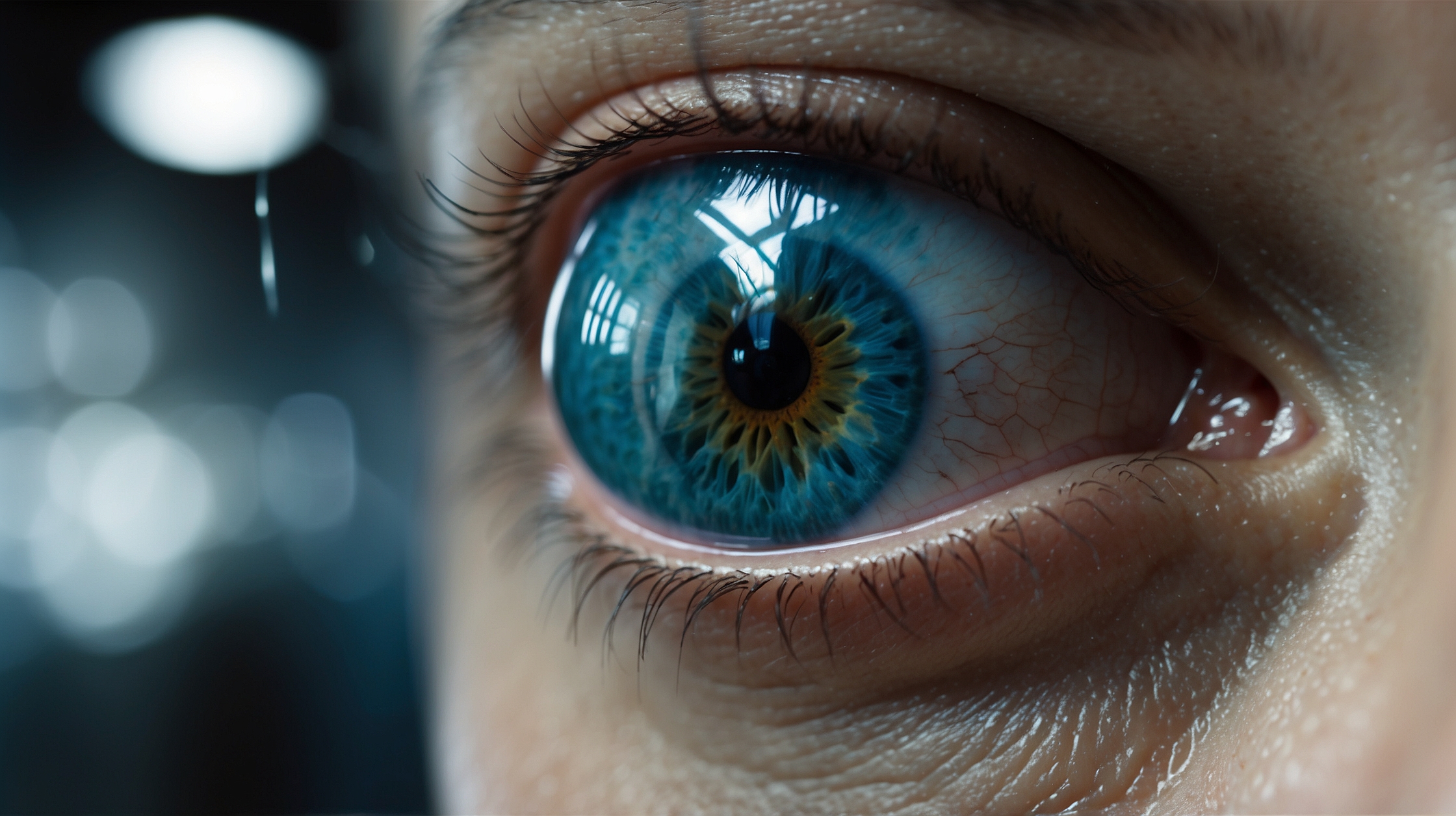
Scientists are on the brink of what could be a groundbreaking advancement in ocular medicine: a **transparent eye gel** that may restore vision for people suffering from corneal blindness. The innovation, attracting attention for its simplicity and promise, could save millions of people from blindness caused by corneal damage, traumas, or diseases. But amid growing optimism, leading ophthalmologists warn that the path from lab bench to clinical use is fraught with meticulous safety tests, regulatory hurdles, and ethical concerns.
The product, developed by a team of researchers, is not a traditional implant or transplant. Instead, it’s a specially designed **hydrogel**—a transparent, jelly-like substance engineered to mimic the human cornea. When injected into the eye, it fills damaged spaces, promotes healing, and supports the natural regeneration of the eye’s own tissue. Early laboratory and animal studies show promising signs of restoring vision and even full corneal function. For patients unable to access donor corneas or surgery, this could be a game-changer.
Key details at a glance
| Innovation | Transparent hydrogel to treat corneal blindness |
| Primary Benefit | Restores vision by promoting corneal regeneration |
| Status | Early-stage research and pre-clinical trials |
| Lead Scientists | Multidisciplinary teams from bioengineering and ophthalmology |
| Potential Users | Patients with corneal scars, ulcers, and loss of transparency |
| Medical Community Response | Promising, but cautious |
| Next Steps | Human clinical trials and long-term safety assessments |
Why this innovation matters globally
It is estimated that **over 12 million people** worldwide live with corneal blindness—a commonly overlooked condition that is especially prevalent in low- and middle-income countries. Access to **corneal transplants** is severely limited by the availability of donor tissue and high surgical costs. In some regions, fewer than one in seventy patients needing the procedure actually receive it. That’s where the new eye gel could disrupt the narrative by offering a scalable, low-cost, and minimally invasive alternative.
“This hydrogel doesn’t just act like a filler. It mimics the biomechanical structure of a real cornea and re-initiates healing,” one of the lead researchers noted. Unlike traditional transplants, the gel could be delivered via a **routine, in-office injection**, removing the need for operating theatres or specialized surgical training.
What’s inside the gel and how it works
At its core, the transparent gel is composed of **engineered collagen**, a protein that naturally makes up the cornea and other connective tissues. Using molecular chemistry techniques, researchers modified the collagen to maintain structural integrity and prevent clouding, which often occurs in scarred tissue. The gel forms a scaffold that permits epithelial cells to grow over it and slowly incorporates itself into the natural eye tissue.
This process promotes **biological regeneration** rather than replacement—an idea that underpins much of regenerative medicine. According to early animal models, the material is biocompatible and gradually resorbed by the body, meaning it could heal the eye without long-term foreign material remaining inside it.
“We’re not simply replacing damaged tissue—we’re helping the eye rebuild itself from within.”
— Dr. Sanjana Mehta, Ophthalmology Researcher
The cautious optimism from eye care professionals
Despite encouraging results, many ophthalmologists are urging **caution over celebration**. Restoring vision isn’t just about transparency—it’s about resilience, curvature, thickness, and refractive accuracy. The cornea plays a pivotal role in focusing light into the eye; even minor irregularities can lead to blurred vision or astigmatism.
“While hydrogels are certainly promising, we can’t validate results until they’re tested under the physiological conditions of a live human eye over extended periods,” said a senior corneal surgeon at an academic eye hospital. There’s skepticism not about the concept, but about its consistency across varied patient populations and individual complexities.
“We’ve seen many breakthroughs in the lab that fail in the complexity of the human eye.”
— Dr. Amit Kalra, Consultant Ophthalmic Surgeon
Who this breakthrough could help first
The first likely beneficiaries of the eye gel would be patients experiencing **corneal trauma**, **ulcers**, or **chemical burns**, especially where conventional transplants aren’t possible or have a high rejection rate. It could also serve in **post-surgical repairs** or in conditions where tissue healing is impaired due to age or autoimmune disorders.
Patients in rural settings—where sophisticated transplant infrastructures don’t exist—could gain access to vision-restoring treatments with minimal equipment. From a public health standpoint, the innovation could significantly reduce the burden on eye banks and reduce inequalities in care provision.
Clinical trials and regulatory hurdles
Any new medical material must undergo **extensive safety and efficacy testing** before regulatory bodies, such as the FDA or EMA, give human trial clearance. Currently, the transparent gel has cleared certain **in vitro and animal model stages**, showing good results in small mammals and porcine corneal models. But human eyes are physiologically different and introduce new variables like immune response diversity and variable corneal curvature.
Researchers now face the monumental task of assembling trial cohorts, acquiring approvals, and ensuring compliance with **GMP (Good Manufacturing Practices)** protocols. If early-phase human trials are successful, it could be another 3–5 years before the gel reaches public health systems.
How it compares to traditional methods
| Winners | Losers |
|---|---|
| Patients in countries with limited cornea donor programs | Regions reliant on traditional transplant infrastructure |
| Healthcare providers in low-cost/outpatient settings | Corneal transplant companies and scaffold manufacturers |
| Public health systems looking for scalable solutions | Private eye hospitals prioritizing surgical procedures |
The road ahead for corneal regeneration therapies
The future of regenerative ophthalmology is rapidly evolving. From 3D bioprinting of tissues to artificial retinas, innovators are rewriting what’s possible. This hydrogel fits squarely into that vision—reshaping how we think about eye injury recovery, accessibility, and personalized care. Still, success demands collaboration among **biomaterial scientists**, **ophthalmologists**, regulators, and patients themselves.
Ethical discussions are also underway. Should patients be offered this as an early alternative when long-term safety isn’t proven? What are the cost implications in developing economies? Ensuring equitable and evidence-based deployment will be just as important as the science behind it.
“Like all medical breakthroughs, impact is defined not only by innovation, but also by access.”
— Dr. Lina Youssef, Global Health Expert
Short FAQs about transparent eye gel for corneal vision loss
What is the transparent eye gel made of?
It is primarily made from modified collagen, engineered to mimic the biochemical and mechanical properties of the human cornea.
Who can benefit from this treatment?
Patients with corneal opacity, ulcerations, trauma, burns, or degenerative corneal diseases may benefit once clinical trials are successful.
Is this treatment better than corneal transplant?
It’s not yet proven to be better but offers a minimally invasive and accessible alternative in settings where transplants are not viable.
Has it been approved for human use?
No, the transparent gel is still in the pre-clinical phase and must undergo rigorous safety and efficacy trials before approval.
When could this be available to patients?
If trials go well, the product might enter the market within 3–5 years, pending regulatory approval.
Are there any known side effects?
No side effects have been recorded in pre-clinical use so far, but comprehensive human testing is needed to confirm its safety profile.
Does the gel restore full vision?
Early results suggest possible restoration of transparency and vision, but more data is needed on long-term visual acuity outcomes.
Can it be used in one eye or both?
Current studies have tested it in single-eye models. Future trials will determine bilateral use feasibility and safety.