🌸 The Mediterranean Secret to Healthier, Longer-Flowering Oleanders
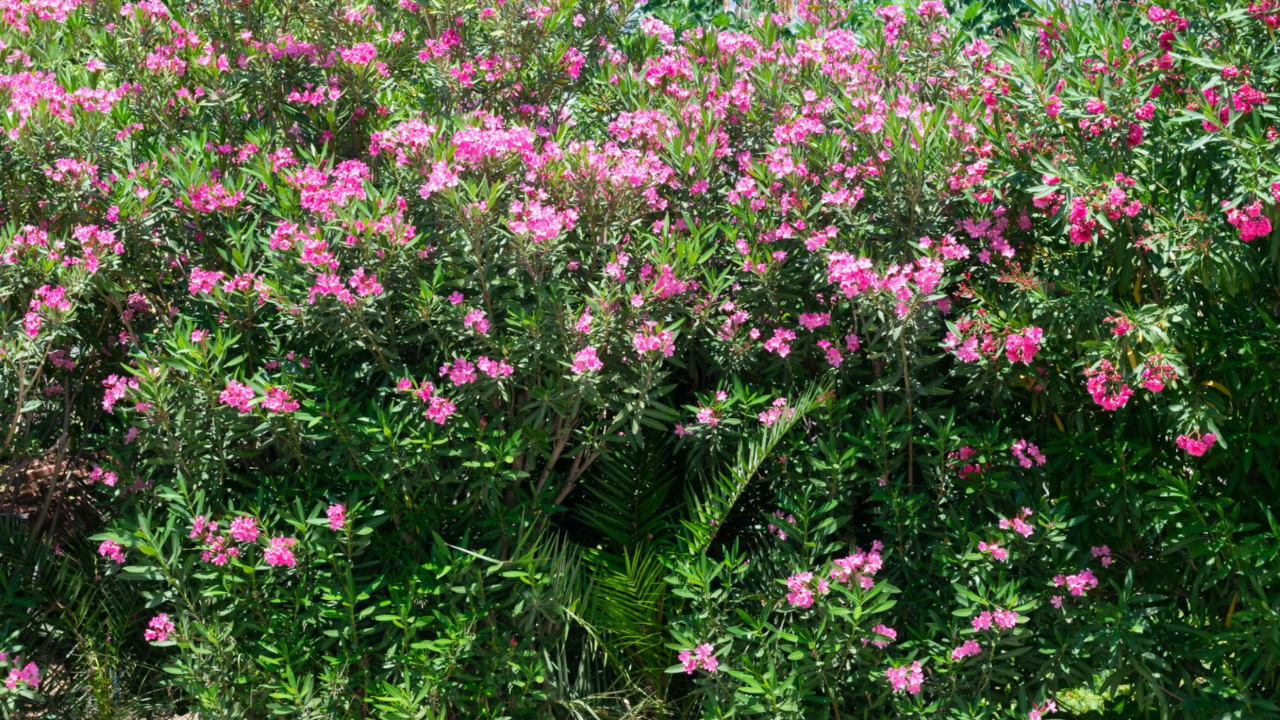
If you travel through Mediterranean regions like southern France, Spain, or Italy, you’ll quickly notice something unusual about oleander shrubs. They rarely look sharply trimmed or aggressively shaped. Instead, they grow in relaxed, flowing forms filled with flowers, buzzing insects, and dense greenery.
This is not neglect — it’s intentional gardening wisdom.
Mediterranean gardeners follow a pruning philosophy based on observation, patience, and plant biology rather than strict shaping rules. And surprisingly, their approach often produces healthier plants, longer flowering seasons, and stronger growth.
🌿 Why Mediterranean Gardeners Avoid Heavy Pruning
1️⃣ Oleanders Flower Based on Natural Growth Cycles
Oleanders produce flowers primarily on new shoots that develop from older wood. When gardeners cut plants heavily or at the wrong time, they remove the growth responsible for future blooms.
Heavy pruning often causes:
- Reduced flowering the following season
- Dense leaf growth but fewer blooms
- Stress that slows recovery
Mediterranean gardeners understand that pruning too aggressively interrupts the shrub’s natural rhythm.
Instead of forcing shape, they gently guide growth.
2️⃣ Climate Encourages Gentle Pruning
The Mediterranean climate plays a huge role in this approach.
Oleanders thrive in:
- Strong sunlight
- Warm temperatures
- Dry, well-drained soil
Under these conditions, plants naturally produce steady growth throughout the season. Light pruning simply nudges them in the right direction without shocking the plant.
In cooler or wetter climates, heavy cuts create large wounds that:
- Increase disease risk
- Slow healing
- Force plants to waste energy rebuilding structure instead of flowering
Mediterranean gardeners work with the plant’s natural pace instead of fighting it.
✂️ How Mediterranean Gardeners Actually Prune Oleanders
🌱 They “Edit” Instead of Reshape
Rather than cutting large sections, Mediterranean gardeners:
✔ Step back and observe the plant
✔ Remove dead or damaged branches
✔ Thin crowded stems from the base
✔ Cut one or two branches at a time
This slow, gradual pruning allows air and sunlight to enter the plant naturally.
The result is:
- Better airflow
- More balanced flowering
- Stronger internal structure
Many Mediterranean gardeners prune casually throughout the year instead of scheduling one large pruning session.
🌿 Their Simple Core Pruning Rules
Mediterranean oleander care typically follows three simple principles:
- Remove dead, diseased, or crossing branches first
- Thin from the base instead of trimming the top
- Prune lightly after flowering, not before
This minimal approach spreads plant stress over time rather than shocking it with major cuts.
⚠️ Why Over-Pruning Oleanders Causes Problems
Oleanders contain toxic sap, which also affects the plant itself during pruning. Large cuts create open wounds that are slow to heal.
Excessive pruning can lead to:
- Increased disease entry points
- Sap loss and plant stress
- Reduced flowering cycles
- Weak, crowded growth at branch tips
Mediterranean gardeners avoid these risks by making fewer but more strategic cuts.
🌸 How You Can Adopt Mediterranean Oleander Pruning
Step 1: Change Your Mindset
Stop thinking of oleanders as formal hedges. They are naturally sun-loving shrubs or small trees that thrive when allowed to breathe and grow freely.
Step 2: Prune After Flowering
The best time to prune oleanders is usually right after the main flowering season.
During this time:
- Remove one or two of the oldest thick stems from the base
- Shorten overly long or awkward branches
- Leave strong upright stems intact
The plant may look slightly uneven temporarily, but it usually fills out naturally during the growing season.
Step 3: Spread Rejuvenation Over Several Years
Instead of cutting everything at once, rejuvenate old shrubs gradually by removing only a few aging stems each year.
This allows:
- Continuous flowering
- Stronger regrowth
- Reduced plant shock
🧤 Safety Tips When Pruning Oleanders
Oleanders are toxic if ingested and can irritate skin. Mediterranean gardeners handle them regularly but safely.
Always:
- Wear gloves and long sleeves
- Wash tools and hands after pruning
- Avoid burning or composting trimmings
- Keep pets and children away from cut branches
🌼 The Hidden Benefits of Natural Oleander Growth
Allowing slightly wild growth offers surprising advantages:
✔ Better shade around plant roots
✔ Increased humidity protection inside foliage
✔ Habitat for birds and pollinators
✔ Longer plant lifespan
✔ Reduced maintenance workload
Mediterranean gardeners prioritize plant health over rigid appearance.
🌿 Rethinking What “Tidy” Means in a Garden
Perfectly squared shrubs may look controlled, but they often sacrifice plant vitality and biodiversity.
Mediterranean gardens embrace a softer, natural style where plants move with wind, sunlight, and seasons.
This philosophy reflects a simple truth:
👉 Plants often perform best when gardeners guide rather than dominate them.
✅ Key Takeaways
- Oleanders flower better with gentle, selective pruning.
- Heavy annual trimming often reduces blooms and stresses plants.
- Mediterranean gardeners prune gradually throughout the year.
- Removing a few old stems from the base improves airflow and growth.
- Allowing natural shape supports healthier, longer-living shrubs.
❓ FAQ
When is the best time to prune oleanders?
Immediately after flowering is ideal because it preserves future buds.
Can I cut an overgrown oleander back drastically?
Yes, but spread major cuts over 2–3 years to prevent plant shock.
Why does my oleander produce fewer flowers after pruning?
Heavy pruning removes flowering wood and forces plants to focus on regrowth instead of blooming.
Is it safe to prune oleanders?
Yes, with protective gloves and proper handling due to toxic sap.
Can oleanders be shaped into small trees?
Yes. Gradual removal of lower branches can train them into tree forms, a common Mediterranean technique.